Risking Life at Folklife

Risking Life at Folklife

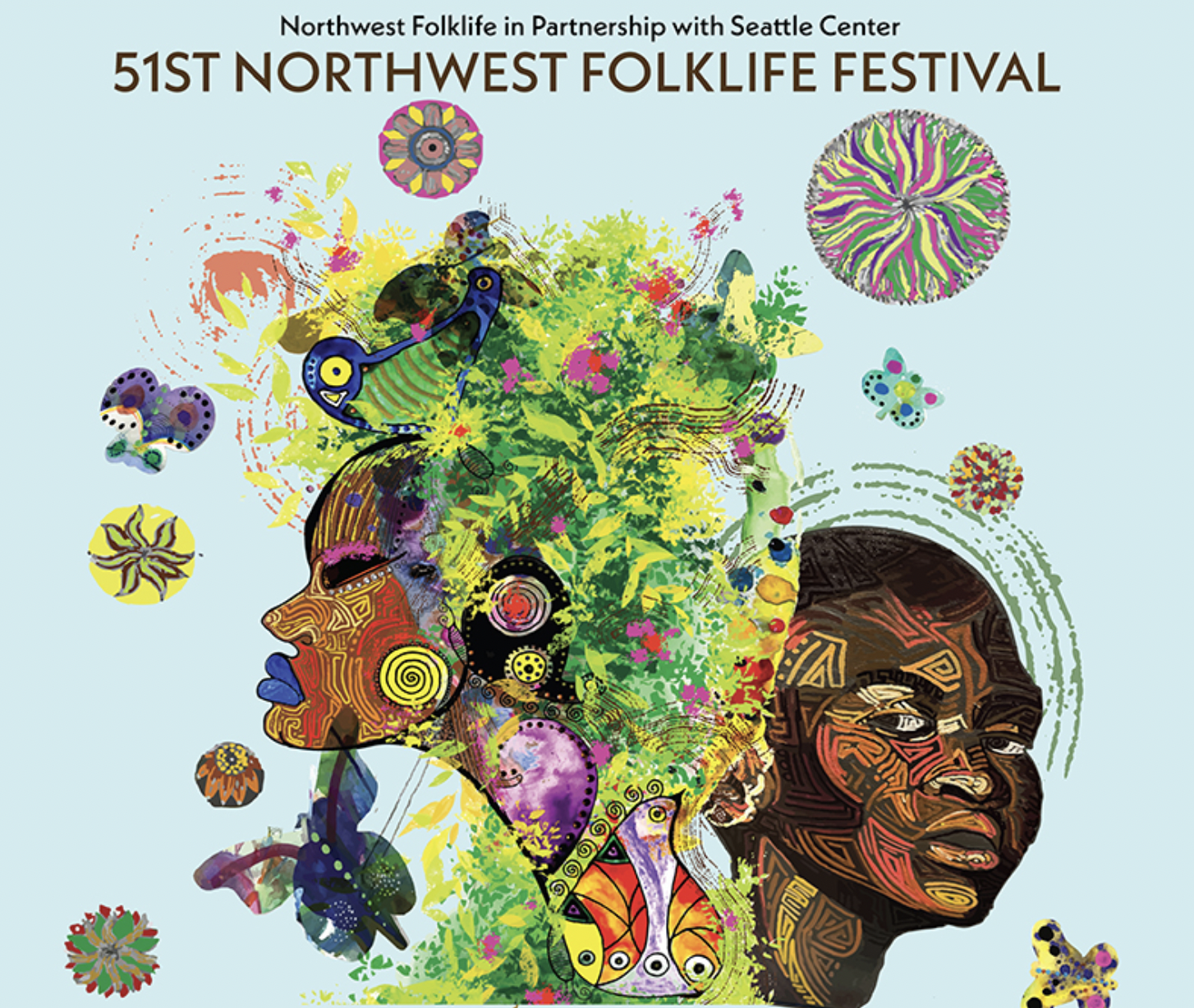
The Folklife Festival was finally back after two years of the forced pandemic hiatus. An email from Fresh Ground Stories Storytelling Group mentioned a “Liars  Contest” on the Armory stage. I’ve never been in a story telling contest  but since the Seattle Center is only a twenty minute walk away, I thought, Why not? Here’s a chance to test out one of my short stories. My Japanese American story.

Despite the cool drizzle, I was happy to get out of my isolation. The unfamiliar number of people walking around the Seattle Center made me nervous and I kept a hand on my mask. Exposing my face as an Asian American woman had certain implications during the pandemic. Recent events in Texas and Buffalo made every place feel dangerous. The Armory’s huge main room has a food court and a stage in the corner. Maybe a hundred folding chairs had been set up in front of the stage. The contest had started by the time I got there. I ended up in one of the few empty seats near the edge of the crowd. 

The moderator knew most of the story tellers he introduced on stage. Were they all from the same group? It only occurred to me later that a “Liars Contest” might be a tradition familiar to a certain ethnic group – white, Mid-west, rural? From the meetup group I joined last year, I knew Fresh Ground Stories was the Seattle version of the Moth. I joined their Zoom meeting hoping to learn tips which might help in my writing. But I didn’t volunteer to speak. I only observed a few story tellers through the distant lens of my computer. Being in the Armory with lots of people was a completely different experience. Then when the moderator sat down in a chair very close to me, I saw my chance and asked him to add my name “Nana” to his paper list. No last name. No incriminating evidence.

Because I didn’t know anyone here, there was nothing to  lose. If I made a fool of myself, no one would know. I listened carefully to the dozen or so storytellers as they went up on the stage one by one. My favorite was the My First Fish tale told by an older woman. The woman looked like she could have been the school librarian at my elementary school in Boulder. She starts off with a sympathetic hero – herself as a young girl left behind by the men who go fishing. The irritated grandmother then takes the girl fishing. When the girl catches a big fish, the storyteller added drama and delight by having the fish leap out of reach. The grandmother’s fantastic skills, a lopsided mountain goat, and a bear all played parts in the chase for the fish. Her story reminded me of my childhood growing up in Colorado. The elements of surprise and suspense kept me hooked.

Finally, the moderator looks at his list and calls out, “Nana?” and I stand up. Everyone looked at me with curiosity as I walk to the stage and stand in front of the mike which the moderator adjusted down to my short height.  What’s this older Japanese American woman going to say?

I looked down on the men, women and kids still wet from the rain, and confessed this was my first time at a story telling contest. I knew my fear would be small compared to everything else. The events of the past two years tired us all out. Shootings, homelessness, and of course, our old friend Corona forced us to struggle between the need to and the fear of connecting with others. Getting together with friends isn’t to be taken for granted anymore. I reached back to the Before Time and said, “I miss going to the Maneki for a drink. You know, that tiny bar in the old restaurant in the ID.” A few nodded their heads in recognition. The Maneki is an old Japanese American restaurant that survived the internment of the Japanese Americans during WWII. 

I chose a folktale as the base for my story because I believe there’s a reason folktales survive. But I added details to the story to ground it in Seattle. The hero in my story is a young man, Lee, who regularly gets drunk, chats, then falls asleep in the Maneki bar before he goes off to work the night shift at the Uwajimaya supermarket. As if I were one of the regulars at the Maneki bar and witnessed all the fantastic things that happened, I told the story. In my story, one of the other regulars gets annoyed by the young drunk and spits a Rainier cherry pit that lands on top of the sleeping man’s head. A week later a tree sprouts on Lee’s head. The tree grows fruit. The tree is chopped off. Then mushrooms grow on the tree stump.

The moderator’s whistle blew cutting my story short right when the lumberjack chops the tree stump out of the hero’s head. Had the audience heard enough of the story to give me feedback? I couldn’t tell.  I’m not good at reading audience reactions. But as I walked back to my seat, one young man said to me, “I want to hear the rest of your story.” I was taken aback. I didn’t want to interrupt the rest of the story telling contest so I just smiled my thanks at him and sat down. I felt grateful for that young man’s interest. At least one person liked the story. Then one more story teller followed and the moderator gave prizes, including one to the woman with the fish story, but nothing for me. Everyone clapped and the event was over. Time to go home.

Then I got a big surprise. A woman came up to me and said, “Tell the rest of your story.”

More people came and stood around me, “Yes, tell us the rest of the story.”

So around ten people waited for me to tell the rest of the story. I should have stood up so they could hear me better, but I was so busy collecting my thoughts I remained seated in my folding chair.  I told the rest of the story to this small group crowded around me. When I finished, they commented. “That was a good story. I liked it being set in Seattle.”  

“I liked the tree growing on top of the kid’s head.” 

“I liked how the pandemic played a part.”

I was stunned. These strangers went to the trouble of coming up to me after the event was over and asked me to tell the rest of my story. Then they patiently stood around me and listened. Someone asked me for a card but I had none. Someone else told me about another story telling group. I felt overwhelmed by this social contact that had been absent for so long. Walking through the rain back home, my heart was full. My idea worked. I heard a Japanese folktale that resonated, then rewrote it in English, then told the story as if I was a witness to this fantastic string of events happening in the here and now. 

That experience was a wonderful reward for all those lonely hours of writing during the pandemic. Not having any idea if what I was thinking and doing would be of any interest to other people. Writing stories is like talking to yourself. Background noise of doubt, insecurities, and self-criticism fill my head as I write. Writers groups, especially the ones on Zoom, only give feedback that’s focused on writerly stuff like POV, tension, and plot. Or maybe it’s the Zoom experience itself that I found off putting. Zoom meetings were better than nothing but I felt so distant from the others. Even before the pandemic, I was not a very outgoing person. I don’t think I would have dared stand in front of a crowd back then. Did the social starvation make me into a performer?

Those people at the Folklife festival gave me a gift. It wasn’t just the speaking from the stage part. It was after the contest. By coming up to me and asking me to tell the rest of my story, they validated all my efforts of the past two years. I’ve always been interested in Japanese folktales and so I tried translating and rewriting them in English for American readers. Even when I myself didn’t understand all the elements of a story, I hoped people would get something out of it. I chose this particular story about the tree that grows on a drunk’s head for Folklife because I set it in Seattle. What could possibly be the moral of this story? For whatever reason, the story survived hundreds of years of retelling, translation from Japanese to English and my Seattle spin on it. The energy I got from  those people gathered around my folding chair at the Armory was palatable. Sharing stories is a necessity, as crucial as food and water, to our survival.
I Tried to Kill Chuck Palahniuk

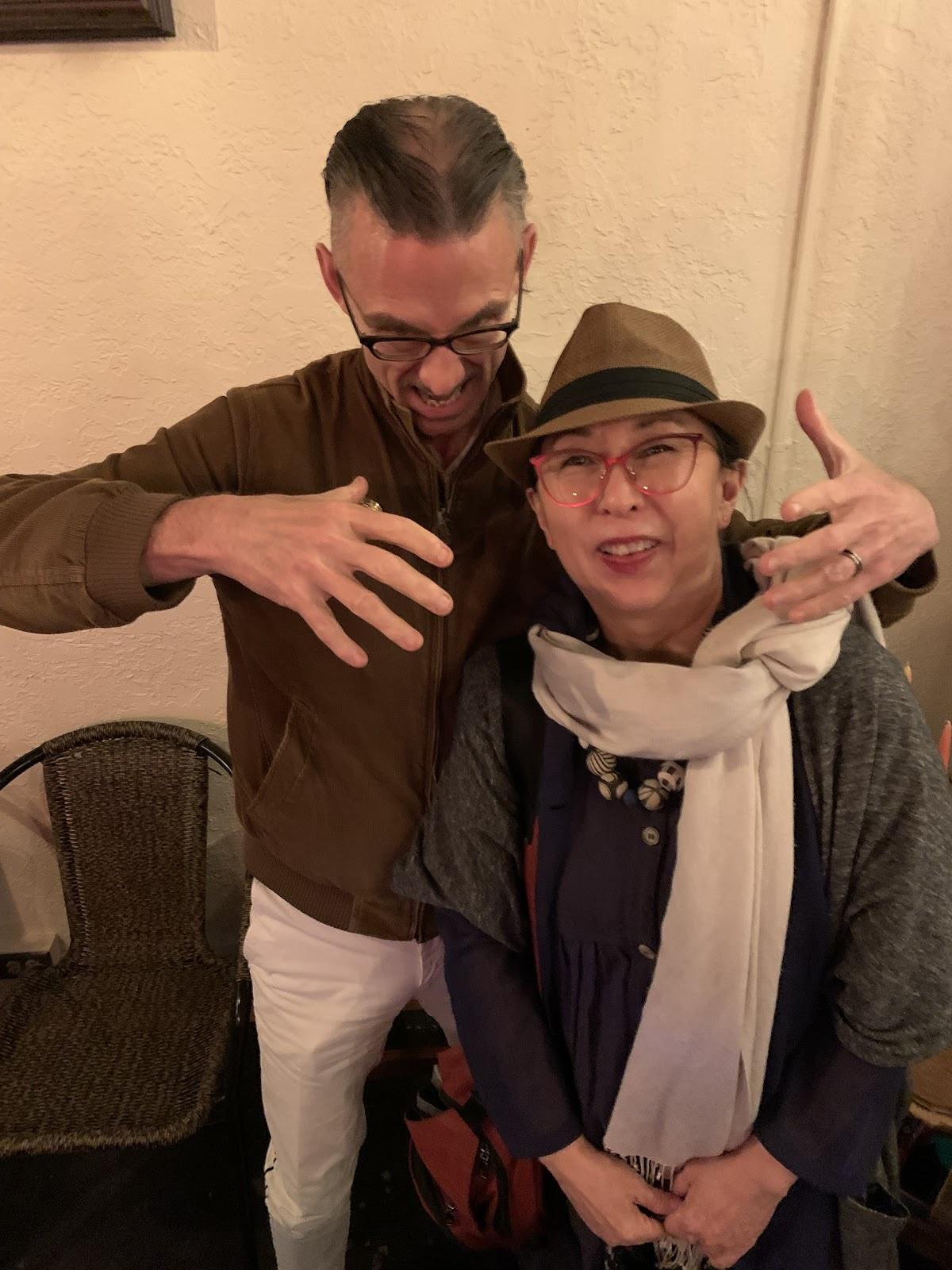
I was late to Chuck Palahniuk’s May 23 story reading session in Portland. After arriving from Seattle earlier that day, I felt like a fish out of water. Yes, I felt like a tired idiom in search of a story. How to get to the pub Chuck mentioned in his online Plot Spoiler group? After witnessing a homeless man stick a needle in his own arm on the street, and a woman get in a fight with herself on the bus, I decided I needed a car. But the Lyft ap wasn’t working. Finally got an Uber but where is the darn car? Consequently I was a nervous wreck by the time I arrived at the pub where we were supposed to read out loud. I planned to read part of the novel I started since the pandemic began. My first novel at an age when I should be at the end of a career, not the beginning. A novel about war, death and the atomic bomb, when my life experiences consisted of raising three kids and teaching at Front Range Community College. Chapter One was what needed feedback. Hundreds of pages written and rewritten but Chapter One is the one that kept eluding me. I wanted readers to understand why this monster of a novel haunted me. Three generations of a Japanese immigrant family before, during and after WWII. Why should the reader care?

Months earlier, I stumbled across a writing book titled “Consider This” and liked it, although I didn’t know the author with the unpronounceable last name. I’m more of an Amy Tan fan. When I learned he wrote the novel which the Fight Club movie was based on, I was curious. I normally didn’t read that kind of stuff but my first novel was forcing me to write about things I didn’t know and didn’t want to know. Violence and gore. I even had to write a fight scene set in the American concentration camp Manzanar. Chuck’s comment that his book “Fight Club” was the young male equivalent of Tan’s “The Joy Luck Club” intrigued me. I can learn something from this guy. So that was how I ended up signing up to read in front of Chuck.

In the Uber drive to the reading session, I checked my bag. Damn. Of course I forgot the story back in my room. No time to go back and get it. As I tried to sneak into the pub, I thought God. The place is packed – maybe a hundred people the same age as my kids. They’ve already listened to some readers. Good. It’s too late to put my name in the hat. But I didn’t come all the way down here from Seattle to just listen. 

Sure enough, Chuck had me write my name and add it to a hat.  A few minutes later it was called out. I gulped, stood up, faced the crowd of shining, expectant faces. Most likely as judgemental as my two millennial sons and millennial daughter. I said, I forgot to bring my story. The audience gasped. The rest is a blur.

My subconscious did a wonderful job. By giving me no time to panic and no paper to read, my naked soul was thrust out into the world. There’s a difference between reading a carefully crafted piece of work, and telling a story from the gut. The paper couldn’t shield me. The scaffolding of words couldn’t support me. I couldn’t go on auto pilot. The story had to stand on its own wobbly little legs. I forced myself to look people in the eye. I am telling you what I know. 

I blurted out what I remembered of Chapter One, then sat down in a daze. People clapped. Thank God there was a reaction. Crickets chirping would have the worst possible reaction. Even hissing and booing is better than that. Then Chuck said something to the effect of – we’re not just listening to stories, we are being called to witness. Witness? Really? They believed me! They understood what I was trying to say!

Reading my written words out loud from a piece of paper (or an I-phone) would have been a different experience. I don’t know if I could have pulled it off. For better or worse, I ended up doing an impromptu speech. But I did come away with some thoughts for my next reading. (Dee Goto asked me to read one of my short stories for the next Stories at the Panama Hotel.) 

  1. Use a story written in first person. (I’m going to have to rewrite that short story for the Panama Hotel.)
  2. Look people in the eye. For me, that means I have to memorize and practice what I’m going to say. 
  3. Let the story go. Dee had read ten of my stories for the Omoide group, and when I asked her which one she thought I should read out loud for the Stories at the Panama, she chose the scatological one. The most embarrassing one. Cringe. But if that’s the one that resonated with her, that’s the one that’ll go. My self dignity won’t stand in the way.

The night before the reading in Portland, I read the discussion thread in Chuck’s Plot Spoiler. A guy named Roy wrote: I first heard the phrase “kill the people” (meaning ‘good luck and slay the audience’) from Thelma Ritter in “All About Eve.” 

Isn’t that what we all hope to do? To reach into the soul of another person and devastate them in some way? To destroy some cherished illusion they had about the world? I want to write stories I love but they have to mean something to the readers, too. Writing and reading are solitary pursuits. Great pandemic pastimes. Consequently, it’s pretty safe. But at some point, the story (and I) have to be tested out in the cold, cruel virus-ridden world. Standing up in front of people to tell a story is the quickest way to kill or be killed. 

My Viola-Playing Mother

Published May 13, 2022 in Voices of the North American Post. https://napost.com/

Several months ago, I joined the Rain City Symphony Orchestra. I hadn’t played cello for over 40 years! And even when I did play, I was definitely no Yo-Yo Ma. But I knew doing this almost impossible challenge would help me get my mind off my burned out, sick of the pandemic, “what am I doing trying to write a novel at my age” despair. The reason I knew this was because of my Japanese immigrant mother.

All during my childhood, Mama nagged me every day to practice my cello.

“Renshu shinasai,” she said.

As a teenager, I finally snapped back at her, “Do it yourself!”

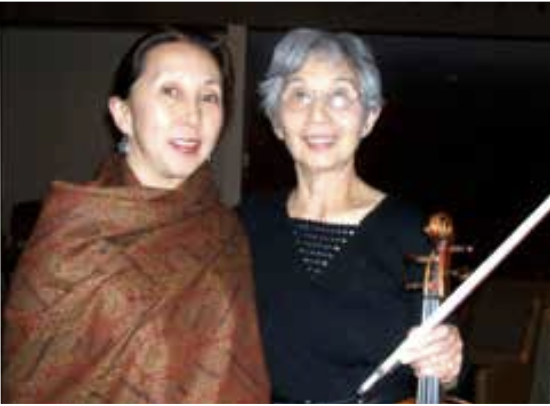
And she did. As a middle-aged housewife with limited English, Mama started private lessons on the viola. She practiced diligently. I can still hear her struggle with the viola. She joined the Timberline community orchestra where she was the only foreigner.

She practiced daily for the next forty years. She practiced despite breaking her arm. She practiced after Dad died. She practiced until she had a stroke in 2018 when she was 86.

As I struggle every day now to remember the scales, the fingering, the bowing and the million other details of playing cello, I keep Mama in my mind — her determination to play a string instrument and connect with others. Despite her age, her language handicap, and her isolation, she managed to do her best. The essence of Gambaru.
I’m hoping to learn to play a lovely orchestral piece by Samuel Coleridge- Taylor without mistakes. But that’s not likely. The June performance is coming up soon. So I’ll just practice every day, or as much as I can, until then. Anyway, the performance is not the important part — it’s the daily efforts which challenge me and bring me joy.

Thoughts from Amy Tan’s Mother’s Day talk:


Amy Tan described her mother muse as “lihai”. Even before I knew it meant “terrible, formidable and devastating” – I was aware my own complicated maternal relationship. In the case of my mother, she was ten years old in Tokyo when WWII began. In hindsight, I believe my mother suffered from PTSD shaped by the trauma, violence and death she encountered during her formative years. Like Tan, I also remember the moment I decided to no longer fight or resist my mother. It was in 2000 when i moved back to Boulder to live near my childhood home. And when my mother realized I was listening, she began to share her wartime trauma with me. But I was in my fifties when I was finally mature enough to listen without judgement or fear.


Amy Tan’s drawing of birds is an example of how writing requires heightened sensitivity. In order to write well, I need to pay attention to the world. Not only what my mother was saying, but also what is she did NOT say. Just as Tan notices the fine lines of a feather that would normally be invisible, I must learn to listen to the whispers of the dead. So I began playing the cello again after a 50 year break. Listening to and playing fine music, note by note helps attune my writing.


Tan’s example of how she used the clues from her grandmother’s photograph to write the novel Valley of Amazement was a wonderful insight into the mind of a writer. She used those details to grow story. I also used a 1934 high school graduation photo of my long lost relative Grace to piece together the day that year when she lost both parents and her future as a mother in a terrible car accident.


In writing Grace’s story, I also tried to follow Tan’s goal of finding the emotional truth behind the factual truth. Using fragments from my father’s letters (Grace’s cousin) who immigrated to the US in 1952, a conversation with Grace’s brother who was trapped in Japan during the war, and online research – I tried to recreate her emotions while she was incarcerated in Manzanar.


Tan’s comments about her husband Lou made me aware of the sacrifices a writer must make. While women praise Lou for being such a thoughtful, supportive husband I wonder if they realize how many sacrifices Tan made to deserve such a partner? Her decision to not have children allowed her to devote her energies to writing. She is willing to work long hours alone to create great stories. I am too selfish to have a “Lou”. I wanted it all. Three children to raise myself at home, interesting work with other people, travel, and now writing only about things I am interested in. So it’s no wonder I’m so unsuccessful in my writing career and single.


Amy Tan made a huge impression on me when her Joy Luck Club novel first appeared in 1989. She inspired me to consider my Japanese American family story worthy of telling.

https://www.bellingham.org/eventdetail/23854/a-conversation-with-amy-tan